.png)
Introduction
The educational technology landscape continues to evolve rapidly, with innovative solutions emerging to address the changing needs of students, teachers, and educational institutions. As we move through 2023, several key trends are shaping how technology is integrated into learning environments. This blog post explores the most significant educational technology trends that are transforming classrooms and learning experiences this year.
1. AI-Powered Personalized Learning
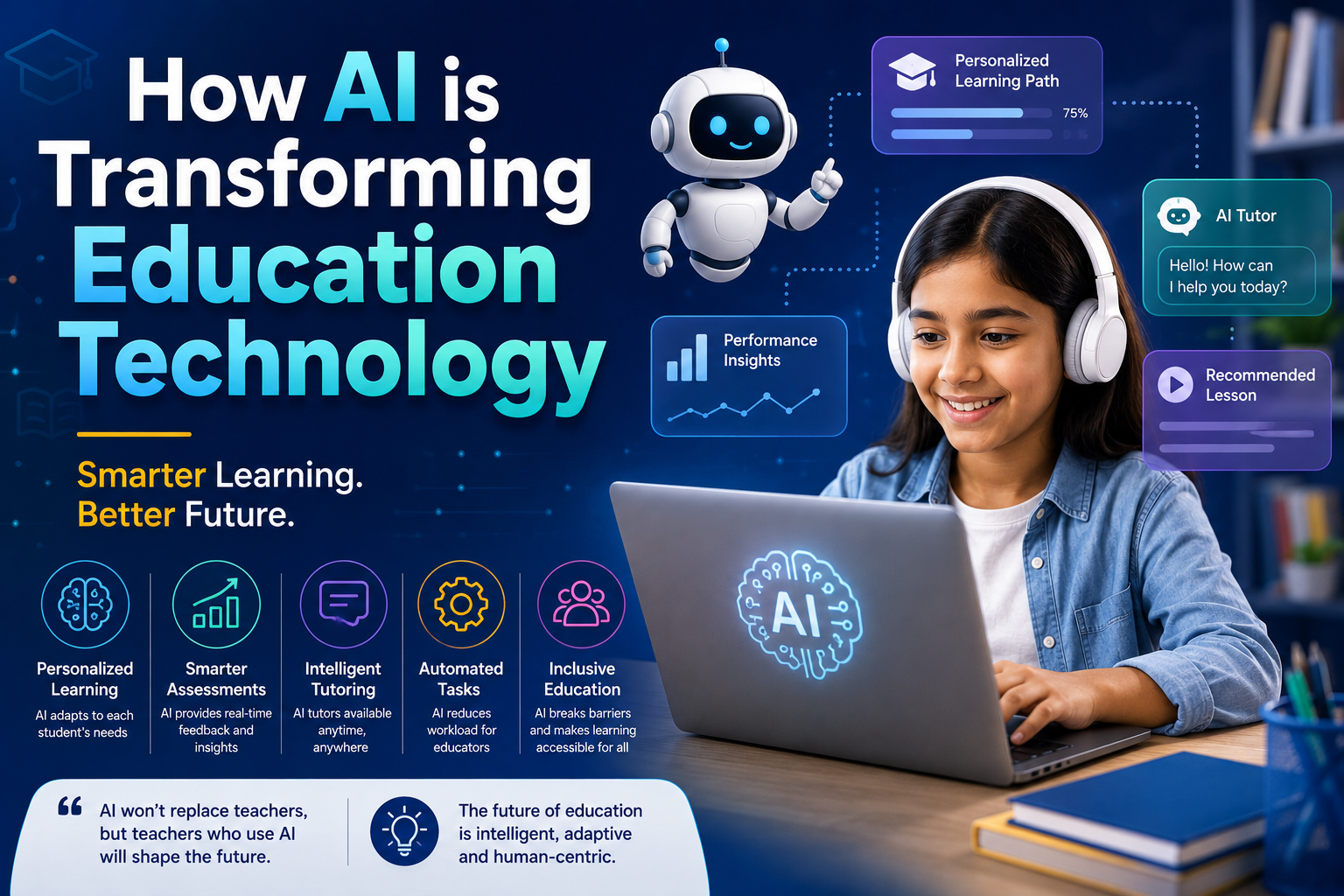
Artificial intelligence has moved beyond being a futuristic concept to becoming a practical tool in education. In 2023, AI-driven personalized learning platforms are gaining significant traction in schools and universities worldwide.
These sophisticated systems analyze individual student performance data to create customized learning pathways. By identifying strengths, weaknesses, and preferred learning styles, AI can deliver tailored content, adjust difficulty levels in real-time, and recommend specific resources to address knowledge gaps.
What makes this trend particularly noteworthy in 2023 is the increasing sophistication of these systems. Modern AI educational tools can now understand context, recognize patterns in learning behavior, and make nuanced recommendations that go beyond simple algorithms. For example, some platforms can detect when a student is consistently struggling with specific types of problems and automatically provide alternative explanations or visual representations that might better suit their learning style.
Companies like Carnegie Learning, DreamBox, and Knewton are leading this space, with their adaptive learning platforms showing measurable improvements in student outcomes across diverse educational settings.
2. Immersive Learning with VR and AR
Virtual Reality (VR) and Augmented Reality (AR) are transforming how students engage with complex or abstract concepts by creating immersive, experiential learning opportunities.
In 2023, we're seeing more affordable and user-friendly VR/AR solutions designed specifically for educational contexts. These technologies are particularly valuable for subjects that benefit from visualization and spatial understanding, such as anatomy, architecture, historical events, and scientific processes.
For instance, medical students can now practice surgical procedures in virtual environments before working with actual patients. History classes can transport students to ancient civilizations or significant historical events. Science students can manipulate molecular structures or explore ecosystems that would be impossible to observe directly.
What's new this year is the increasing integration of these immersive technologies with learning management systems and curriculum standards, making them more practical for everyday classroom use rather than occasional novelties. Companies like ClassVR, Labster, and Google's Expeditions are making significant inroads in educational institutions by providing comprehensive content libraries aligned with educational standards.
3. Hybrid Learning Models
The pandemic accelerated the adoption of remote learning technologies, and in 2023, we're seeing the emergence of sophisticated hybrid learning models that combine the best aspects of in-person and online education.
These hybrid approaches go beyond simply offering some classes online and others in person. Instead, they represent thoughtfully designed educational experiences that leverage technology to enhance flexibility, accessibility, and engagement while maintaining meaningful human connections.
Modern hybrid learning environments feature synchronous and asynchronous components, collaborative digital workspaces, and seamless transitions between physical and virtual learning activities. For example, a class might begin with an in-person discussion, continue with individual online research and virtual collaboration, and conclude with a physical hands-on project that applies the digital learning.
Educational institutions are investing in technology infrastructure that supports these fluid learning experiences, including high-quality video conferencing systems, digital collaboration tools, and learning management systems designed for hybrid delivery. Platforms like Canvas, Blackboard Ultra, and Microsoft Teams for Education have evolved to better support these integrated approaches.
4. Microlearning and Bite-Sized Content
As attention spans shorten and the demand for flexible learning options increases, microlearning has emerged as a significant trend in 2023. This approach involves delivering educational content in small, focused units that can be completed in short time periods.
Microlearning is particularly well-suited to mobile devices and on-the-go learning, making education more accessible for busy students and working professionals. These bite-sized modules typically focus on a single learning objective and can be consumed in 5-15 minutes, fitting easily into breaks throughout the day.
What makes this trend notable in 2023 is the increasing sophistication of microlearning platforms that use spaced repetition algorithms, adaptive questioning, and gamification elements to maximize retention and engagement. Research continues to demonstrate that well-designed microlearning can lead to better information retention and application compared to traditional lengthy lectures or readings.
Companies like Duolingo, Kahoot!, and EdApp are leading this space, with their platforms showing significant adoption in both educational and corporate learning environments.
5. Blockchain for Educational Credentials
Blockchain technology is making significant inroads in education through its application to academic credentials and certification. In 2023, more educational institutions are exploring blockchain-based systems for issuing, storing, and verifying academic achievements.
These systems create tamper-proof digital records of degrees, certificates, and other credentials that can be easily shared and verified by employers or other institutions. Unlike traditional paper certificates or even digital PDFs, blockchain credentials cannot be forged or altered, addressing the growing problem of qualification fraud.
Beyond security, blockchain credentials offer other advantages: they can include detailed information about specific skills and competencies acquired, they remain accessible even if the issuing institution closes, and they can be programmed with smart contracts that automatically verify prerequisite achievements.
Organizations like Blockcerts, Credly, and the Digital Credentials Consortium (led by MIT and other major universities) are developing standards and platforms for blockchain credentials that are gaining adoption across the educational landscape.
6. Data-Driven Decision Making in Education
Educational data analytics has evolved significantly, and in 2023, we're seeing more sophisticated approaches to using data for decision-making at all levels of education.
Modern educational analytics platforms go beyond simple metrics like test scores and attendance. They now incorporate diverse data sources�including learning management system interactions, digital assessment results, student feedback, and even behavioral indicators�to provide comprehensive insights into educational effectiveness.
At the classroom level, teachers use these analytics to identify struggling students, recognize effective instructional strategies, and make evidence-based adjustments to their teaching approaches. At the institutional level, administrators leverage data to optimize resource allocation, improve curriculum design, and enhance student support services.
What's particularly notable in 2023 is the increasing focus on ethical data use and student privacy alongside analytical capabilities. Leading platforms now incorporate robust privacy protections, transparent data governance, and features that help educators interpret data in context rather than making decisions based solely on algorithms.
Companies like Intelliboard, Watershed LRS, and BrightBytes are providing increasingly sophisticated analytics solutions designed specifically for educational contexts.
7. Gamification and Game-Based Learning
Gamification�the application of game elements to non-game contexts�continues to gain momentum in education during 2023. Modern educational gamification goes far beyond simple point systems and leaderboards to create truly engaging learning experiences.
Today's gamified learning platforms incorporate narrative elements, adaptive challenges, meaningful choices, and social collaboration to create intrinsically motivating educational experiences. These approaches leverage the psychological principles that make games compelling while ensuring that learning objectives remain the primary focus.
What's evolving in 2023 is the increasing sophistication of game-based learning design and the growing body of research supporting its effectiveness when implemented thoughtfully. Educators are becoming more discerning about which gamification elements to incorporate for different learning contexts and student populations.
Platforms like Classcraft, Gimkit, and Seppo are leading this space with solutions that transform traditional curriculum into engaging game-like experiences without sacrificing educational rigor.
8. AI-Enhanced Robotics in Education
Educational robotics has evolved from simple programmable toys to sophisticated learning tools that combine physical hardware with AI capabilities. In 2023, we're seeing increased adoption of these advanced robotics platforms in classrooms from elementary through higher education.
These AI-enhanced robots serve multiple educational purposes: they provide hands-on experience with cutting-edge technology, they make abstract programming concepts tangible, and they offer engaging ways to explore STEM subjects. Some educational robots can now recognize objects, respond to voice commands, demonstrate emotional intelligence, and adapt their behavior based on interactions with students.
What's particularly notable this year is the increasing accessibility of these technologies. More affordable options are entering the market, and improved user interfaces are making robotics more approachable for younger students and non-technical educators. Additionally, comprehensive curriculum resources aligned with educational standards are making it easier for teachers to integrate robotics meaningfully into their teaching.
Companies like Wonder Workshop, LEGO Education, and Ozobot are continuing to innovate in this space, creating robots specifically designed for educational contexts.
9. Social-Emotional Learning Technologies
As awareness of the importance of social-emotional learning (SEL) grows, 2023 has seen the emergence of technologies specifically designed to support the development of these crucial skills.
These platforms use various approaches to help students develop self-awareness, emotional regulation, empathy, relationship skills, and responsible decision-making. Some use interactive scenarios and role-playing to practice social interactions, while others employ AI-powered chatbots that help students process emotions and develop coping strategies.
What makes this trend significant in 2023 is the increasing sophistication of these tools and their growing integration with academic content. Rather than treating SEL as a separate subject, modern approaches recognize that emotional and social skills are intertwined with academic learning and can be developed simultaneously.
Companies like Mightifier, Move This World, and Peekapak are creating innovative SEL technologies that are being adopted by forward-thinking educational institutions.
10. Sustainability in EdTech
As environmental concerns become more pressing, 2023 has seen increased attention to sustainability within educational technology. This trend manifests in several ways:
- Hardware designed for longevity, repairability, and eventual recycling
- Energy-efficient devices and software that minimize power consumption
- Cloud services powered by renewable energy
- Digital alternatives that reduce paper consumption and physical materials
- Educational content focused on environmental literacy and sustainable practices
What's notable this year is that sustainability is becoming a significant factor in purchasing decisions for educational institutions, driving technology providers to improve their environmental credentials. Schools and universities are increasingly considering the total environmental impact of technology solutions, including manufacturing, usage, and end-of-life disposal.
Companies like Fairphone, Framework, and Apple (with its expanded recycling programs) are leading in sustainable hardware design, while major cloud providers like Google and Microsoft are making significant commitments to renewable energy for their educational platforms.
Conclusion
The educational technology trends of 2023 reflect a maturing industry that is increasingly focused on creating meaningful, effective, and accessible learning experiences. From AI-powered personalization to immersive technologies, from blockchain credentials to sustainable design, these innovations are transforming how we teach and learn.
What's particularly encouraging is the growing emphasis on evidence-based approaches and thoughtful implementation rather than technology for its own sake. As these trends continue to evolve, they promise to make education more engaging, effective, and equitable for learners of all ages and backgrounds.
Educational institutions that strategically adopt these technologies�while maintaining focus on sound pedagogical principles and human connections�will be well-positioned to prepare students for success in an increasingly digital and rapidly changing world.