Introduction
Artificial Intelligence (AI) is revolutionizing numerous industries, and education is no exception. As AI technologies continue to advance, they're creating unprecedented opportunities to enhance teaching and learning experiences. From personalized learning paths to administrative efficiency, AI is reshaping educational technology in ways that benefit students, teachers, and institutions alike. This blog post explores the transformative impact of AI on education and what the future might hold for AI-powered learning.
Personalized Learning at Scale
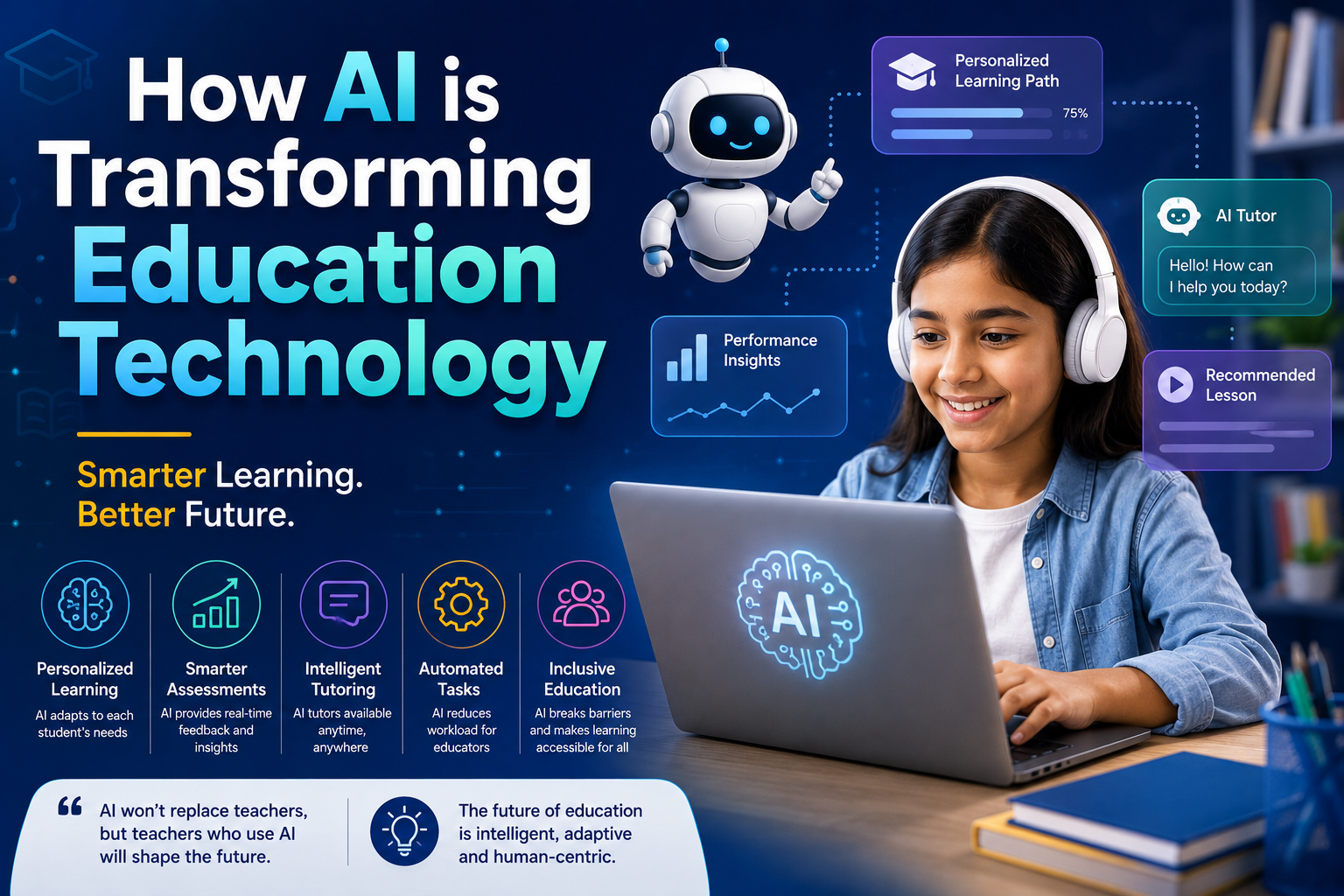
Perhaps the most significant contribution of AI to education is its ability to personalize learning experiences for individual students. Traditional classroom settings often struggle to accommodate diverse learning styles, paces, and preferences. AI-powered adaptive learning platforms address this challenge by analyzing student performance data and tailoring content accordingly.
These intelligent systems can identify knowledge gaps, recognize when a student is struggling with specific concepts, and adjust the difficulty level of materials in real-time. For example, if a student consistently struggles with algebraic equations but excels in geometry, the AI can provide additional resources and practice for algebra while offering more advanced geometry problems.
What makes this particularly revolutionary is the ability to deliver personalized education at scale. While a human teacher might struggle to create individualized learning plans for 30 different students, AI can simultaneously adapt to thousands of learners, ensuring each receives an education tailored to their unique needs.
Intelligent Tutoring Systems
AI-powered tutoring systems are becoming increasingly sophisticated, offering students one-on-one support that mimics human tutoring. These virtual tutors can answer questions, provide explanations, and guide students through complex problem-solving processes with remarkable patience and adaptability.
Modern intelligent tutoring systems employ natural language processing to engage in conversational interactions with students. They can understand questions posed in various ways, recognize misconceptions in student responses, and provide targeted feedback that addresses specific areas of confusion.
Some advanced systems even incorporate emotional intelligence, detecting frustration or disengagement through facial recognition or interaction patterns. When a student appears discouraged, the system might offer encouragement, simplify the current task, or suggest a short break�much like an attentive human tutor would.
Automating Administrative Tasks
Teachers often spend countless hours on administrative tasks like grading assignments, taking attendance, and generating reports�time that could otherwise be devoted to instruction and student interaction. AI is helping reclaim this valuable time by automating routine administrative functions.
Automated grading systems can now evaluate not just multiple-choice questions but also essays, short answers, and even mathematical proofs. Natural language processing algorithms assess writing for grammar, structure, coherence, and content, providing detailed feedback to students while saving teachers significant time.
Beyond grading, AI tools can generate personalized progress reports, identify trends in classroom performance, and even predict which students might be at risk of falling behind. These insights enable teachers to make data-informed decisions about where to focus their attention and how to structure upcoming lessons.
Content Creation and Curation
Creating high-quality educational content is time-consuming, but AI is streamlining this process through automated content generation and intelligent curation. AI systems can develop practice questions, summarize complex texts, and even create customized worksheets based on specific learning objectives.
For example, a teacher preparing a lesson on photosynthesis might use an AI tool to generate a variety of assessment questions ranging from basic recall to complex application scenarios. The same tool might also compile relevant videos, interactive simulations, and reading materials from across the web, saving hours of search time.
AI-powered content recommendation engines function similarly to those used by streaming services, suggesting educational resources based on a student's learning history, preferences, and goals. This ensures learners have access to materials that are not only relevant to their studies but also aligned with their preferred learning modalities.
Early Intervention and Support
One of the most promising applications of AI in education is its ability to identify students who need additional support before traditional assessment methods might reveal struggles. By analyzing patterns in student interactions with learning platforms, AI can detect early warning signs of confusion, disengagement, or learning disabilities.
These predictive analytics enable proactive intervention rather than reactive remediation. For instance, if an AI system notices a student spending unusually long periods on certain types of math problems or repeatedly making the same error, it can alert teachers to provide targeted assistance before the student falls significantly behind.
For students with learning disabilities or special educational needs, AI offers particularly valuable support. Speech recognition and text-to-speech technologies assist students with reading difficulties, while specialized programs provide additional practice and alternative explanations for concepts that prove challenging.
Global Access and Inclusion
AI is helping bridge educational divides by making quality learning experiences more accessible regardless of geographic location or socioeconomic status. Language translation capabilities allow students to access educational content in their native language, while text-to-speech and speech-to-text functionalities support learners with visual or hearing impairments.
In regions with teacher shortages, AI-powered learning platforms provide structured educational experiences that might otherwise be unavailable. While these technologies cannot fully replace human teachers, they offer valuable learning opportunities in contexts where traditional education is limited or inaccessible.
Furthermore, AI systems can adapt to various cultural contexts and learning traditions, making education more inclusive and culturally responsive. As these technologies continue to develop, they have the potential to democratize education on a global scale.
Challenges and Ethical Considerations
Despite its transformative potential, the integration of AI in education raises important challenges and ethical questions that must be addressed:
Data Privacy and Security
AI systems require vast amounts of student data to function effectively, raising concerns about privacy, security, and appropriate use of information. Educational institutions must implement robust data protection measures and transparent policies regarding data collection and usage.
Algorithmic Bias
AI systems may inadvertently perpetuate or amplify existing biases if their training data contains biased patterns. Ensuring that educational AI is fair and equitable across different demographic groups requires ongoing vigilance and diverse development teams.
The Human Element
While AI offers numerous benefits, it cannot replace the social, emotional, and motivational aspects of human teaching. The most effective educational approaches will likely combine AI-powered tools with meaningful human interaction and guidance.
Digital Divide
As education becomes increasingly technology-dependent, there's a risk of widening the gap between those with access to advanced AI tools and those without. Addressing this digital divide is essential for ensuring that AI enhances educational equity rather than diminishing it.
The Future of AI in Education
Looking ahead, several emerging trends suggest where AI in education might be heading:
Immersive Learning Experiences
The combination of AI with virtual and augmented reality technologies promises to create immersive learning environments that make abstract concepts tangible and engaging. Imagine students exploring ancient Rome through VR while an AI guide customizes the experience based on their interests and learning objectives.
Lifelong Learning Companions
Future AI systems might function as lifelong learning companions, adapting to individuals' changing educational needs from early childhood through retirement. These AI partners would build comprehensive understanding of their users' learning styles, preferences, and goals over time.
Collaborative Intelligence
Rather than replacing human teachers, the most promising future for AI in education lies in collaborative intelligence�systems designed to enhance human capabilities rather than substitute for them. Teachers and AI will work in tandem, each contributing their unique strengths to create optimal learning experiences.
Conclusion
Artificial Intelligence is transforming education in profound ways, offering unprecedented opportunities for personalization, efficiency, and accessibility. While challenges remain, particularly regarding ethics, equity, and the balance between technology and human connection, the thoughtful integration of AI into educational contexts has enormous potential to enhance learning outcomes.
As we navigate this technological revolution in education, maintaining a focus on student well-being and development�not just academic achievement�will be essential. By harnessing AI as a tool in service of comprehensive educational goals, we can create learning experiences that are more engaging, effective, and equitable than ever before.
The future of education isn't just about AI replacing traditional methods�it's about reimagining what's possible when human creativity and technological capability work in harmony to inspire and empower learners of all ages.
.png)