Introduction
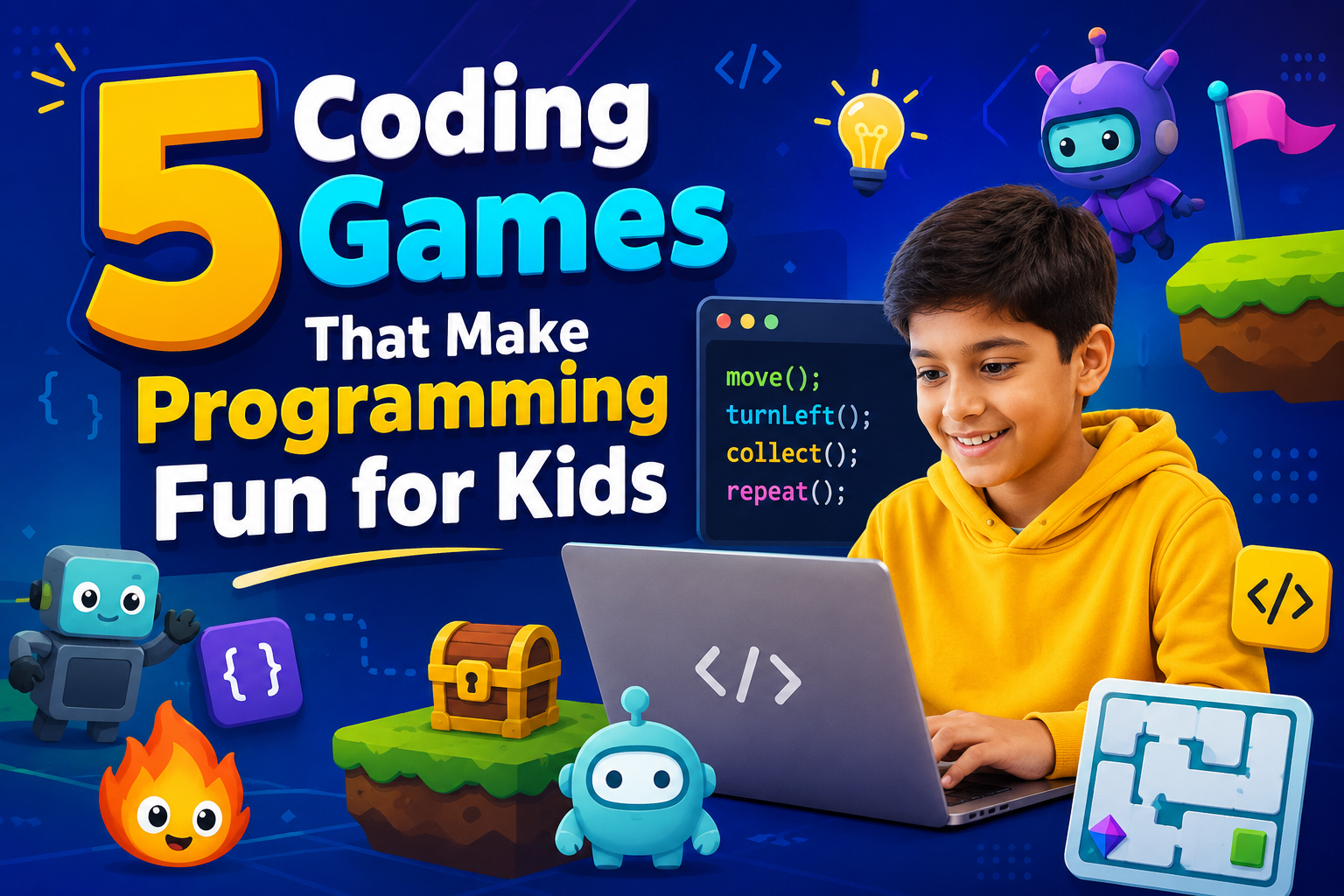
Learning to code doesn't have to be a daunting task for children. With the right approach, programming can be an exciting and enjoyable activity that sparks creativity and develops critical thinking skills. Coding games provide an excellent entry point for kids to explore the world of programming in a fun and engaging way. In this blog post, we'll explore five fantastic coding games that make programming accessible and enjoyable for young learners.
1. Scratch
Developed by MIT, Scratch is a block-based visual programming language designed specifically for children aged 8-16. It allows kids to create interactive stories, animations, and games by dragging and dropping colorful code blocks rather than typing out complex syntax.
What makes Scratch particularly effective is its intuitive interface and immediate visual feedback. Children can see the results of their code in real-time, which helps them understand cause-and-effect relationships in programming. The platform also features a vibrant online community where young coders can share their projects and draw inspiration from others.
2. CodeCombat
For kids who enjoy adventure games, CodeCombat offers an immersive experience that teaches Python and JavaScript through a fantasy role-playing game. Players navigate their characters through dungeons and overcome obstacles by writing actual code.
The game progressively introduces more complex coding concepts as players advance through levels, building a solid foundation in programming principles. What sets CodeCombat apart is how seamlessly it integrates learning with gameplay�children are often so engaged in the adventure that they don't realize they're simultaneously mastering programming skills.
3. Minecraft: Education Edition
Minecraft, the wildly popular sandbox game, has an educational version that includes coding features. Using visual code blocks or text-based languages like JavaScript, children can program in-game agents to perform tasks and automate processes within the Minecraft world.
The familiar and beloved Minecraft environment provides a comfortable context for learning coding concepts. Kids can apply their programming skills to build elaborate structures, create interactive elements, and solve problems in a 3D world they already enjoy exploring.
4. Tynker
Tynker offers a comprehensive platform with coding puzzles, projects, and courses designed for different age groups. Beginning with block-based coding for younger children, it gradually transitions to text-based languages like Python and JavaScript as learners progress.
What makes Tynker particularly effective is its themed coding activities that align with children's interests, from creating animations of popular characters to programming drones and robots. The platform also provides structured courses that build upon previous knowledge, ensuring a systematic learning progression.
5. Roboblockly
Roboblockly combines robotics and programming in a virtual environment. Children can program virtual robots to navigate mazes, solve puzzles, and complete challenges using block-based code.
The platform emphasizes mathematical concepts alongside coding principles, reinforcing STEM education holistically. By visualizing how their code controls robot movements, children develop spatial reasoning and logical thinking skills. Roboblockly also offers printable activity sheets that connect virtual learning with physical activities, providing a well-rounded educational experience.
Benefits of Learning Through Coding Games
These coding games offer numerous benefits beyond just teaching programming syntax:
- Problem-solving skills: Children learn to break down complex problems into manageable steps.
- Computational thinking: Games develop logical reasoning and pattern recognition abilities.
- Creativity: Open-ended platforms encourage creative expression through code.
- Persistence: Debugging and troubleshooting teach resilience and the value of learning from mistakes.
- Collaboration: Many platforms include community features that promote sharing and teamwork.
Getting Started
To introduce your child to coding games, consider these tips:
- Choose age-appropriate platforms that align with your child's interests.
- Start with block-based coding before transitioning to text-based languages.
- Set aside regular time for coding practice, treating it as both educational and recreational.
- Participate alongside your child initially to provide support and share in the learning experience.
- Celebrate achievements and creative projects to maintain motivation.
Conclusion
Coding games transform programming from a potentially intimidating subject into an exciting adventure for children. By disguising learning as play, these platforms nurture crucial skills while keeping young learners engaged and enthusiastic. Whether your child dreams of becoming a future software developer or simply benefits from the cognitive skills that coding develops, these five games provide excellent starting points for their programming journey.
Remember that the goal isn't necessarily to create professional programmers but to foster computational thinking, problem-solving abilities, and digital literacy that will serve children well in any future path they choose. By making programming fun and accessible through games, we open doors to a world of creative possibilities for the next generation.
.png)